
Working on something complex? Maybe it’s a major report, checking out new market trends, or digging into the latest studies. You realize a quick Google search won’t help a lot.
That’s where you should know what is AI deep research? It goes way beyond skimming top results. AI gathers data from multiple sources and builds a complete picture with recent patterns.
Add AI to your research and you’ve got something powerful. Deep research AI handles the messy stuff:
- Outlines your project
- Finds sources
- Analyzes findings
- Summarizes everything into tight, cited reports
Minutes instead of days. Researchers everywhere are using these features because surface-level answers don’t work when you’re researching something complex.
This article breaks down what is deep research, how it works, and five industries where it’s changing everything.
What Deep Research AI Really Is?
The problem is most people think using AI chat features is research. It doesn’t.
If you’re wondering what is deep research, think of it as AI-powered analysis that goes beyond surface-level answers.
AI like ChatGPT and Gemini pull from training data. Maybe a quick web search. That’s fine for simple questions.
But business decisions? Academic papers? Complex analysis?
You’re getting a summary of a summary. No depth. No verification. Deep research AI is different.
Think of a smart intern who knows their stuff. You give them a messy, complicated question.
They don’t Google and copy the first three results. They break it down. Hunt sources that actually matter. Read everything. Spot gaps. Fill them. Keep going until it’s rock solid.
The difference?
ChatGPT: Quick answers from old data
Deep research: Thorough, cited, verified work
That’s the difference. One gives you quick answers. The other gives you thorough, verified, genuinely useful work.
The tech term is “agentic system”—meaning the AI makes judgment calls while working. It might read 200 web pages, analyze data files, compare sources for agreement, then write a proper report with footnotes in the right spots.
Companies like Oreate AI built this into their tools. It replaces what used to take an entire afternoon or longer.
Why this matters as we’re moving past the basic response in 30 seconds to actually true, backed by real sources, ready to use data.
How does Deep Research Work?
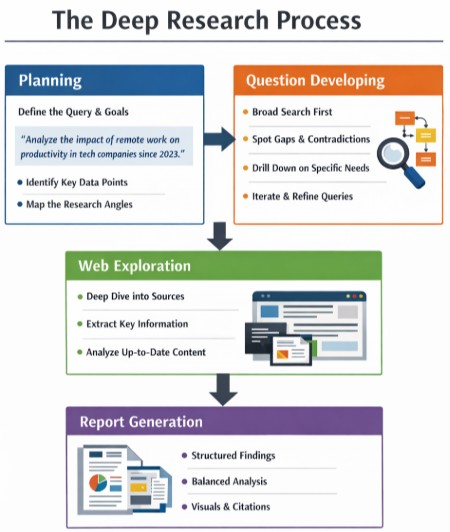
Deep research isn’t something out of the box. It follows a simple mechanic based on the following main stages.
-
Planning
Give your prompt “Analyze the impact of remote work on productivity in tech companies since 2023.” The AI turns this into structured objectives. What data points matter? Which angles to cover? It maps everything out.
-
Question Developing
The system doesn’t just run one search and call it done. It builds a chain of targeted queries that evolve as it learns.
Here’s how this phase works:
- First pass: Broad search to map the landscape
- Spot gaps: Missing data? Contradicting sources? It notices
- Drill down: Needs 2023-specific studies? European vs. US data? It creates new queries on the spot
- Rinse and repeat: Keeps refining until coverage is solid
Example: Starting with “remote work productivity,” early results might show most studies focus on large enterprises. The AI catches this gap. Spins up new searches for startups and mid-size companies. No manual nudging required.
The approach stays flexible & this adaptation happens in real time.
-
Web Exploration
The AI tools doesn’t just grab snippets. It visits pages, reads full articles or reports, extracts key facts, decides whether to go deeper or pivot. Handles real-time data. Avoids outdated sources. Keeps looping until it has quality material.
-
Report Generation
Everything turns into a document with clear sections, balanced takes, visuals if required, & proper citations. The whole process takes 5 to 30 minutes depending on prompt complexity. The output feels like something a skilled researcher spent a week on.
That’s how deep research works AI. No manual babysitting after the initial prompt. The best part is that no coding or special setup is needed.
5 High-Value Applications of Deep Research with AI
Deep research AI isn’t just a nice-to-have. It is delivering measurable wins in real professional industries. Here are five industries where it’s making a difference.

1. Academia and Higher Education
Students and professors used to spend weeks on literature reviews for papers or thesis. Now deep research AI scans hundreds of academic sources and summarizes findings.
It highlights debates and suggests research gaps with citations. A PhD candidate studying climate policy can get a twenty page synthesis of the latest IPCC reports regional studies and policy analyses in under thirty minutes.
Educators prepare lecture materials or grant proposals faster. This frees up time for actual teaching and mentoring. The result is higher quality work and less burnout
2. Business Strategy and Market Intelligence
Businesses entering into new markets or analyzing competitors cannot afford to rely on guess work. Deep research AI pulls together the regulatory landscape, user behavior, competitor financials, and supply chain data into one clear actionable report.
Imagine a startup founder checking electric vehicle adoption in Southeast Asia. The AI gathers recent sales numbers, government incentives, infrastructure updates, and expert forecasts with full sources attached.
Marketing teams run audience deep dives that shape campaigns with much more precision than surveys ever could. So, Decisions end up faster and smarter.
3. Legal and Compliance Work
Law firms and in-house teams are drowning in paperwork. They have to check case laws, regulations, contracts, and pages and pages of it.
Deep research AI cuts through the mess.
What it actually does:
- Speeds up due diligence (no more weeks of manual digging)
- Analyzes past cases and finds what actually matters
- Runs compliance checks without the headache
Instead of junior associates burning days in databases, the tool shares a clean overview.
Relevant rulings. Risk factors. Recent changes—all in one place.
The best part is it also catches contradictions between jurisdictions. Flags stuff you’d miss at 2 AM. And yeah, everything’s cited. You can verify it yourself.
Corporate teams preparing for audits or mergers save serious time. More importantly, they stop worrying about that one critical detail slipping through the cracks.
4. Healthcare and Medical Research
Doctors and researchers can’t keep up with new studies dropping daily. Trials everywhere. It’s information overload.
Deep research helps them stay current without drowning in papers.
A specialist looking into new diabetes treatments gets a clean, balanced summary. Effective data, side effects, and ongoing trials worldwide. All pulled together fast.
Public health teams can use it during outbreaks. Need rapid evidence reviews? Done. Hours instead of days.
All this supports professionals as it doesn’t replace their clinical judgment. The doctor still decides. The AI just hands them better information, faster.
The real win is research reaching patients quicker. Less time digging through journals.
5. Journalism and Investigative Reporting
Reporters chasing stories under tight deadlines used to depend on manual clipping services.
Deep research AI now delivers background briefings fact checks across conflicting sources and event timelines in minutes.
An investigative journalist digging into corporate misconduct can get a full dossier drawn from financial filings news archives court records and whistleblower reports.
It flags inconsistencies and points to possible follow up angles.
Fact checking teams rely on how fast it verifies claims against primary sources. Hence, the result is more accurate in depth reporting without the usual time pressure.
How to Try Deep Research AI Yourself
Now that you’ve seen how deep research is transforming industries, the next step is to try it yourself. Tools like Oreate AI allow you to deep research any industry. whether it’s healthcare, finance, education, or investigative reporting by generating a complete research report within 30 minutes.
Here’s how the process works:
Step 1: Log In and Access the Deep Research Feature
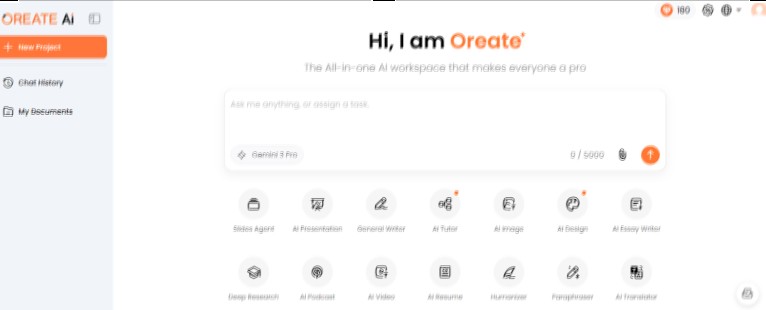
Step 2: Enter a Research Prompt for Any Industry

Step 3: Review and Adjust the AI-Generated Outline
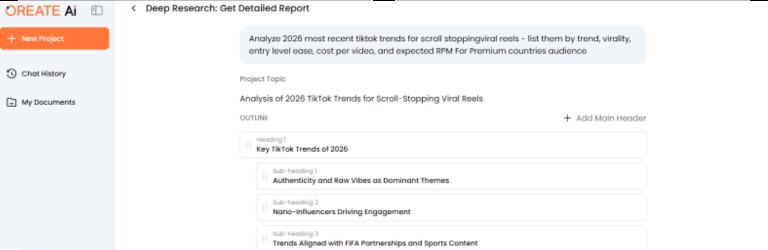
Step 4: Generate the Full Industry Research Report
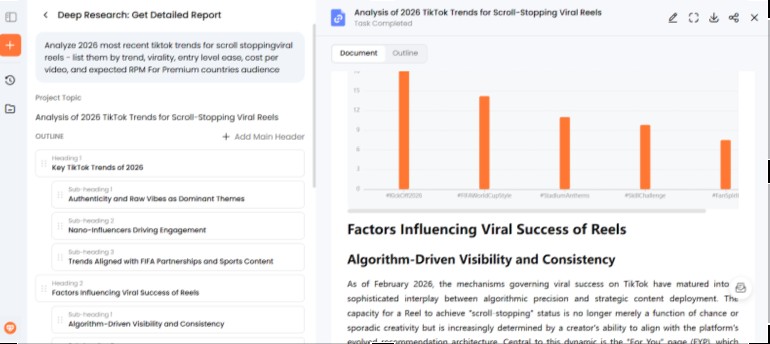
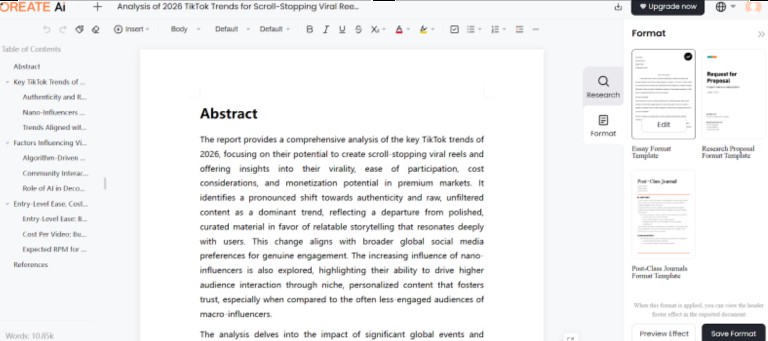
Step 5: Edit and Format the Report Using Built-In Templates
Conclusion – Stop Googling, Start Deep Researching
Honestly, if you’ve ever asked yourself what is AI deep research and why it even matters — this is your answer.
Deep research AI does the heavy lifting for you — finding sources, checking facts, pulling everything together — while you focus on actually doing something with the information.
And the good thing is you don’t have to be a tech savvy to use it – just be a person who can type a question.
So why not give it a shot? Head over to Oreate AI Deep Research, throw in something you’ve been meaning to look into, and see what it comes up with. Honestly, once you try it, going back to the old way of doing research is going to feel pretty painful.