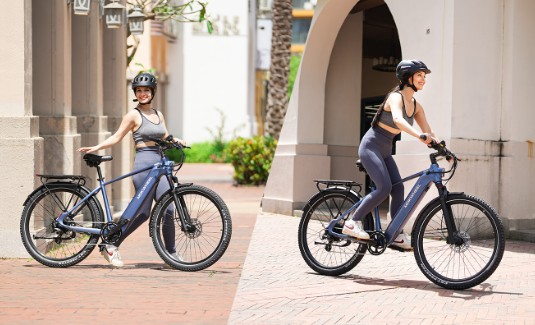
In many cities, commuting is quietly changing. Roads have not become noticeably wider, yet commuting distances continue to grow. While transportation options have increased, truly stable and low-stress choices have not expanded at the same pace. For many people, commuting is no longer about whether they can get to work, but whether they can do so consistently and within a predictable time frame.
It is under this pressure that electric bikes have re-entered the conversation around urban mobility—not as a recreational option, but as a tool capable of fitting into daily routines. And “faster” has emerged not as a goal, but as a consequence of that reality.
When City Life Speeds Up, Slower Options Are Not Automatically Accommodated
In an ideal setting, slower riding would always feel more relaxed. In real urban commuting, however, slower modes are not automatically accommodated simply because they are more sustainable.
Fixed work schedules, dense traffic signals, and constantly shifting traffic flows all compress the time available for commuting. When riding speed falls out of sync with the city’s overall pace, uncertainty increases. A slow start or a difficult incline can disrupt the entire commute.
This is why, in commuting contexts, speed is less about thrill and more about matching urban rhythm.
Fast Ebikes Are Not the Result of a Performance Arms Race
Fast ebikes are often misunderstood as products of escalating performance competition. From an urban mobility perspective, however, they are better understood as a practical response.
In cities, cyclists must maintain flexibility while staying reasonably aligned with surrounding traffic. The value of fast ebikes lies not in competing with cars but in reducing the gap between cycling pace and city traffic flow, making riding more stable and predictable.
For this reason, many commuter-focused designs now emphasize speed within clearly defined limits rather than outright performance.
Speed Only Has Long-Term Value Within Legal Frameworks
Most states follow the Class 1 / Class 2 / Class 3 electric bike classification system, with Class 3 (28 mph) widely recognized as the practical upper limit for long-term urban commuting.
Beyond this range, vehicles often face stricter regulatory requirements and may lose access to bike lanes or shared road systems. As a result, the form of “speed” that cities actually accept is speed within established rules.
This explains why many commuter-oriented electric bikes today focus less on pushing top speed and more on delivering consistent performance within the 28 mph range.
When Speed Is Used to Reduce Effort, Not Create Pressure
In real-world use, the advantage of a fast ebike does not come from sustained high speeds, but from having sufficient power in reserve.
With smoother starts and more relaxed cruising, riders can complete the same commute with lower physical strain. In high-frequency urban riding, some commuter-focused models are designed specifically to provide this sense of ease rather than excitement.
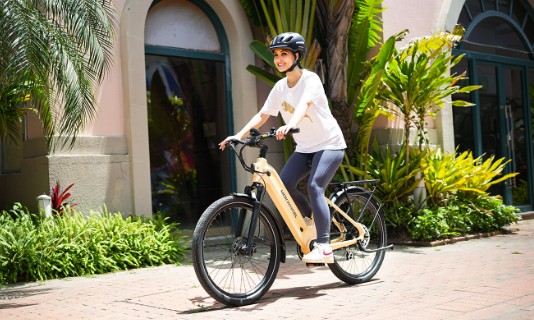
Bikes such as the Tarmac or Asphalt reflect this approach—not by emphasizing extreme performance, but by helping everyday starts, acceleration, and cruising feel more natural, making riding easier to integrate into daily life.
Legal-Speed “Fast” Ebikes Are Taking a Clear Shape
Once legality, stability, and high-frequency use become the design baseline, a clear profile for commuter fast ebikes begins to emerge.
Some models prioritize maintaining a consistent commuting rhythm within legal speed limits rather than maximizing single-point performance. These designs tend to suit riders with fixed commuting distances and regular riding schedules, and they are often easier to live with over time.
In these situations, speed is not the objective—it is the byproduct of a stable commuting experience.
Electric Bikes Are Becoming Urban “Time Tools”
From a broader perspective, the role of electric bikes is evolving. They are no longer just vehicles for reaching a destination, but tools for managing time.
As commuting shifts from something endured to something controlled and predictable, riding becomes more sustainable as a daily habit. Fast ebikes are moving toward the mainstream precisely because they fit into this transition.
Conclusion: Fast Ebikes Are a Rational Response to Urban Reality
Faster electric bikes are becoming part of the urban commuting norm, not because riders are seeking more aggressive experiences, but because cities no longer leave much room for slow movement. By improving speed margin and commuting stability within legal limits, fast ebikes offer a realistic way to survive modern urban commuting. They are not a challenge to rules, but a response to real-world conditions. That is why fast ebikes are gradually being accepted—and chosen—across U.S. cities.