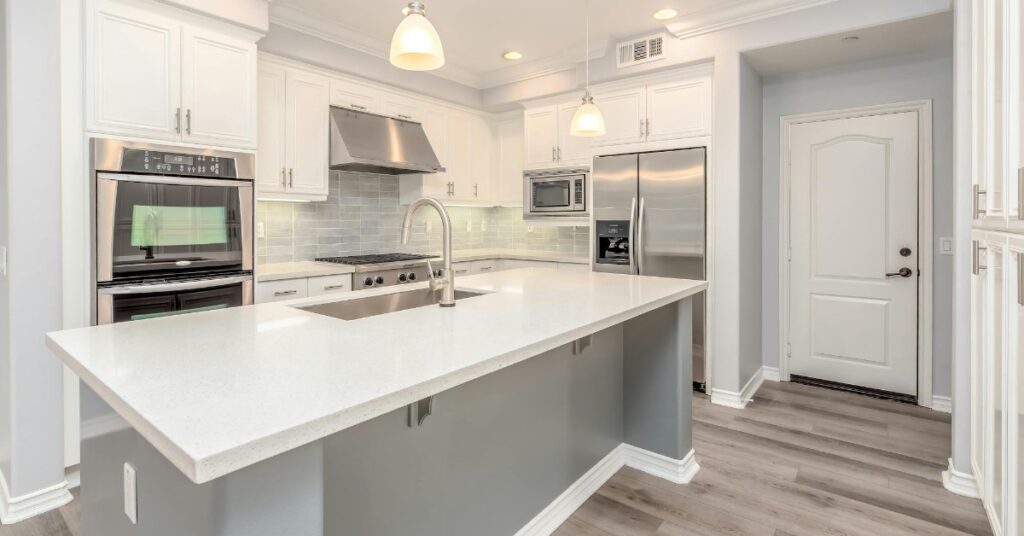
Kitchen cabinets influence the appearance, function, and overall character of one of the most important rooms in a home. When cabinets look dated, worn, or out of step with the rest of the space, homeowners often face a major decision: repaint the existing cabinets or replace them entirely.
Both options can improve the kitchen, but they solve different problems. Cabinet painting is primarily a cosmetic transformation. Cabinet replacement is a larger renovation that can change the layout, storage capacity, materials, and construction of the cabinetry.
The right choice depends on the condition of the existing cabinets, the homeowner’s goals, budget, schedule, and expectations for the finished space.
Start With the Condition of the Existing Cabinets
The first question is not which option costs less. It is whether the current cabinets are structurally sound enough to keep.
Cabinet painting may be a strong option when:
- Cabinet boxes are solid
- Doors and drawer fronts are in good condition
- Shelves are stable
- Hinges can be adjusted or replaced
- The layout works well
- Storage is adequate
- Damage is mostly cosmetic
- The homeowner likes the existing cabinet style
Replacement may be more appropriate when:
- Cabinet boxes are warped or failing
- Shelves sag
- Water damage is extensive
- Doors no longer close properly
- The layout is inefficient
- Storage is inadequate
- Cabinets are poorly constructed
- The homeowner wants a completely different design
Painting cannot correct major structural problems. A new finish may improve appearance, but it will not repair deteriorated cabinet boxes, weak shelves, or an impractical layout.
What Cabinet Painting Involves
Professional cabinet painting is more detailed than painting walls.
Kitchen cabinets are handled frequently and exposed to grease, moisture, food, cleaning products, and daily wear. The finish must be properly prepared and applied to withstand regular use.
A professional cabinet painting process may include:
- Inspecting cabinet condition
- Removing doors, drawer fronts, and hardware
- Labeling components
- Cleaning and degreasing surfaces
- Sanding or deglossing the existing finish
- Repairing minor dents or imperfections
- Priming with a compatible bonding primer
- Applying cabinet-grade finish coats
- Allowing adequate drying and curing time
- Reinstalling doors, drawers, and hardware
- Completing final adjustments and touch-ups
The exact process depends on the cabinet material and existing finish.
Cabinet painting should not consist of simply brushing regular wall paint over the doors while they remain attached. Shortcuts may lead to visible brush marks, poor adhesion, chipping, and an uneven finish.
What Cabinet Replacement Involves
Cabinet replacement removes the existing cabinetry and installs new cabinet boxes, doors, drawer systems, and related components.
Replacement may involve:
- Demolition and disposal
- New cabinet design
- Updated layout
- Custom or semi-custom cabinetry
- New countertops
- Plumbing changes
- Electrical work
- Flooring repairs
- Backsplash replacement
- Drywall and paint repairs
- Hardware installation
- Longer project coordination
Cabinet replacement provides more flexibility, but it also creates a larger renovation.
Homeowners should consider whether they are prepared for the additional cost, scheduling, dust, noise, and temporary loss of kitchen access.
Cabinet Painting Usually Costs Less
Painting existing cabinets is generally less expensive than replacing them because the cabinet boxes, doors, and drawer fronts remain in place.
The total cost depends on:
- Number of doors and drawers
- Cabinet size
- Existing finish
- Surface condition
- Repairs
- Paint system
- Interior cabinet painting
- Island color changes
- Hardware replacement
- Labor required for preparation
A small kitchen with simple doors may require less work than a large kitchen with detailed trim, glass inserts, decorative panels, and numerous drawers.
Replacement costs vary even more widely because homeowners can choose stock, semi-custom, or custom cabinetry.
Additional expenses may include:
- Demolition
- Disposal
- Installation
- Countertops
- Plumbing
- Electrical work
- Trim
- Flooring repairs
- Wall repairs
- Painting
- Design fees
Homeowners should compare the full project cost rather than only the cabinet purchase price.
Painting Can Produce a Major Visual Change
Cabinet painting can dramatically change a kitchen without altering the layout.
A darker wood kitchen can be transformed with a lighter color. A worn white finish can be refreshed. An island can be painted a contrasting color to create a focal point.
Painting may help:
- Brighten the room
- Modernize dated cabinetry
- Coordinate cabinets with new flooring or counters
- Create a more cohesive color palette
- Improve listing photographs
- Refresh the kitchen before selling
- Extend the useful life of existing cabinets
The result depends heavily on preparation and finish quality.
A smooth, professionally applied cabinet coating can create a refined appearance. A rushed or poorly prepared finish may look uneven and fail under regular use.
Replacement Allows Layout Changes
One of the biggest advantages of replacement is the ability to redesign the kitchen.
Homeowners may be able to:
- Add drawers
- Increase storage
- Extend cabinets to the ceiling
- Add a pantry
- Install an island
- Improve corner storage
- Add pullout shelves
- Change appliance placement
- Improve accessibility
- Create a more open layout
Cabinet painting cannot solve a layout problem.
When the kitchen is difficult to use or storage is inadequate, replacement may provide greater long-term value than investing in the existing cabinets.
Cabinet Material Matters
Not every cabinet surface responds to paint in the same way.
Common cabinet materials include:
- Solid wood
- Wood veneer
- Medium-density fiberboard
- Plywood
- Laminate
- Thermofoil
- Previously painted surfaces
Solid wood and many properly constructed wood-based cabinets can often be painted successfully when prepared correctly.
Laminate and thermofoil surfaces require careful evaluation. Some may be suitable for specialized preparation and coatings, while others may have adhesion problems or peeling layers that make painting less practical.
A contractor should inspect the cabinet material before recommending a process.
Existing Finish Affects Preparation
Cabinets may have:
- Factory-applied finishes
- Stain and clear coat
- Lacquer
- Paint
- Glaze
- Varnish
- Oil-based coatings
- Unknown previous products
The surface must be cleaned and prepared so the primer and finish can bond correctly.
Grease and cooking residue are especially important. Cabinets may look clean while still carrying a film that interferes with adhesion.
The painter should identify:
- Whether the surface needs degreasing
- How much sanding is required
- Whether a bonding primer is necessary
- Whether stains or wood tannins may bleed through
- Whether the existing coating is stable
- Which finish product is compatible
Applying paint without evaluating the existing surface can lead to peeling, chipping, or discoloration.
Door Style Influences the Final Look
Cabinet painting changes the color and finish, but it does not change the basic door style.
A raised-panel door will remain a raised-panel door. A flat-panel door will remain flat. Decorative routing, arches, and trim details will still be present after painting.
Painting may be a good choice when the homeowner likes the door style but dislikes the color.
Replacement may be more appropriate when the cabinet style itself feels outdated or does not match the desired design.
Some homeowners consider replacing only the doors and drawer fronts while keeping the cabinet boxes. This option, often called refacing, falls between painting and full replacement.
Cabinet Painting Is Usually Faster
Cabinet painting typically takes less time than a full cabinet replacement, although it still requires careful scheduling.
The kitchen may remain partially usable during parts of the project, but doors and drawers may be removed and work areas may need to be protected.
The timeline depends on:
- Number of cabinets
- Preparation needs
- Drying time
- Curing requirements
- Repair work
- Application method
- Product used
Replacement often takes longer because it may involve design, ordering, manufacturing, demolition, installation, countertop work, plumbing, electrical work, and final repairs.
Custom cabinets can require substantial lead time before installation even begins.
Curing Time Should Not Be Overlooked
Cabinet coatings may feel dry before they reach full hardness.
Homeowners should follow the contractor’s guidance regarding:
- Reinstalling hardware
- Closing doors
- Placing items on shelves
- Cleaning painted surfaces
- Using strong household cleaners
- Normal kitchen use
Using cabinets too aggressively before the finish cures can cause dents, sticking, or premature wear.
A professional contractor should explain drying and curing expectations before the project is completed.
Durability Depends on Preparation and Product Choice
Homeowners often ask whether painted cabinets are durable.
A properly prepared and professionally coated cabinet system can perform well, but no finish is indestructible.
Durability depends on:
- Surface condition
- Cleaning and degreasing
- Sanding or deglossing
- Primer compatibility
- Finish product
- Application method
- Cure time
- Daily use
- Cleaning practices
High-contact areas such as drawer edges, trash cabinets, sink cabinets, and frequently used doors may show wear sooner than less-used surfaces.
Cabinet replacement also does not eliminate maintenance. Factory finishes can scratch, chip, fade, or wear over time.
Cleaning and Maintenance Matter
Painted cabinets should be cleaned gently.
Homeowners should generally avoid:
- Abrasive scrubbers
- Harsh solvents
- Excessive moisture
- Strong degreasers unless approved
- Scraping dried material with sharp tools
- Repeated impact from hardware or appliances
A soft cloth and mild cleaning solution are often sufficient for routine care.
The painter should provide maintenance instructions for the specific coating used.
Hardware Can Improve the Transformation
New knobs, pulls, and hinges can make painted cabinets feel more updated.
Before painting begins, homeowners should decide whether they want to:
- Reuse existing hardware
- Change finishes
- Install larger pulls
- Add hardware where none exists
- Use concealed hinges
- Fill old hardware holes
- Drill new holes
Changing hardware spacing may require filling and repairing old holes before the cabinets are painted.
Hardware selection should be completed early enough to avoid delaying reinstallation.
Countertops and Backsplashes Affect the Color Choice
Cabinet color should coordinate with the permanent features in the kitchen.
Consider:
- Countertops
- Backsplash
- Flooring
- Wall color
- Appliances
- Lighting
- Hardware
- Nearby rooms
A cabinet color that looks attractive on a small sample may appear very different across an entire kitchen.
Homeowners should test samples near the countertop and backsplash under both natural and artificial lighting.
Painting May Be Ideal Before Selling
Cabinet painting can be a practical pre-sale improvement when the cabinets are structurally sound but look dated or worn.
A fresh finish may help:
- Brighten listing photos
- Modernize the kitchen
- Reduce the appearance of wear
- Appeal to more buyers
- Avoid the cost of a full remodel
Sellers should avoid highly personal colors and focus on finishes that coordinate with the rest of the home.
The project should be completed early enough to allow curing, hardware installation, cleaning, and photography.
Replacement May Be Better for a Long-Term Remodel
Homeowners planning to remain in the property for many years may place greater value on layout improvements and customized storage.
Replacement may be worth considering when the homeowner wants:
- Higher-quality construction
- More drawers
- Better organizational features
- Full-height cabinets
- A new island
- Improved accessibility
- A different kitchen layout
- Integrated appliances
- A major design change
Painting can refresh the appearance, but replacement can change how the kitchen functions.
Environmental Considerations
Painting existing cabinets keeps usable materials in place and may reduce demolition waste.
Replacement sends old cabinet boxes, doors, hardware, and related materials into the waste stream unless they are donated, sold, or repurposed.
Homeowners interested in reducing waste may prefer painting when the existing cabinetry is still functional.
However, badly damaged cabinets may not be worth preserving solely to avoid disposal.
Questions to Ask Before Choosing Cabinet Painting
Before hiring a cabinet painter, ask:
- Are these cabinets suitable for painting?
- What material are they made from?
- How will grease and residue be removed?
- Will the doors and drawer fronts be removed?
- What preparation is included?
- Which primer will be used?
- Which finish product will be applied?
- How many coats are included?
- How will the cabinet boxes be painted?
- Will spraying, brushing, or rolling be used?
- How long will the project take?
- How long will the finish need to cure?
- Is hardware removal and reinstallation included?
- How should the cabinets be cleaned afterward?
- Is a workmanship warranty provided?
The contractor should be able to explain the process clearly and provide examples of completed cabinet projects.
Questions to Ask Before Cabinet Replacement
Before replacing cabinets, ask:
- Can the current layout be improved?
- Are the cabinet boxes truly beyond repair?
- What level of cabinet construction is being proposed?
- Are cabinets stock, semi-custom, or custom?
- What is the expected lead time?
- Is demolition included?
- Who will handle disposal?
- Will countertops need to be replaced?
- Are plumbing or electrical changes required?
- Will flooring or drywall need repair?
- What is the complete installed cost?
- How long will the kitchen be unavailable?
- What warranty is included?
- Who will coordinate all trades?
A full renovation should be evaluated as a complete project rather than a cabinet-only purchase.
Cabinet Painting May Be the Better Choice When
Painting may make sense when:
- Cabinets are structurally sound
- The existing layout works
- Storage is adequate
- The homeowner mainly wants a new color
- The project budget is limited
- A faster update is preferred
- The home is being prepared for sale
- The cabinet style is still appealing
Cabinet Replacement May Be the Better Choice When
Replacement may make sense when:
- Cabinets are damaged or failing
- The layout does not work
- Storage is inadequate
- The homeowner wants a different door style
- Major kitchen renovations are already planned
- Countertops and flooring are being replaced
- Long-term customization is a priority
- Repair costs approach replacement costs
Compare Long-Term Value, Not Just Initial Price
The lowest-cost option is not always the best decision.
Painting failing cabinets may delay an inevitable replacement. Replacing sound cabinets may create unnecessary expense when the homeowner only wants a color change.
The best value comes from matching the solution to the actual problem.
Homeowners should evaluate:
- Cabinet condition
- Layout
- Storage
- Desired appearance
- Project timeline
- Budget
- Length of time they plan to remain in the home
- Scope of other renovations
A Professional Evaluation Can Clarify the Best Option
Cabinet painting and cabinet replacement are not interchangeable. Painting refreshes existing cabinetry, while replacement creates an opportunity to redesign the kitchen.
Homeowners considering cabinet painting in Colorado Springs should begin with a professional inspection of the cabinet boxes, doors, drawer fronts, existing finish, and hardware. This helps determine whether the cabinets are suitable for painting and what preparation will be required.
Done Right Painting and Construction provides professional cabinet painting and refinishing for Colorado Springs homeowners. When existing cabinets are structurally sound, a carefully prepared and professionally applied finish can create a major visual update without the cost and disruption of full replacement.
The right choice should improve not only the appearance of the kitchen, but also the homeowner’s long-term satisfaction with the space.