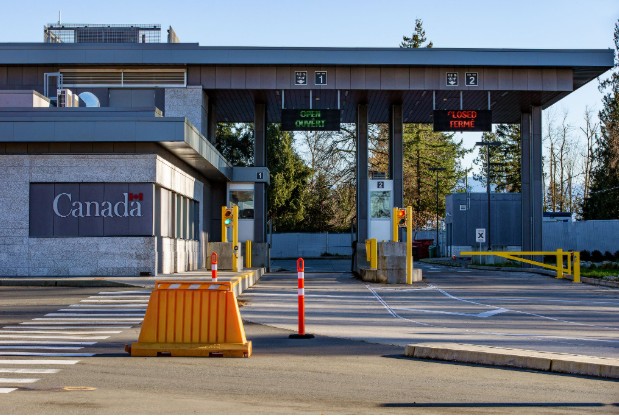
Yes, you can enter Canada with a DUI on your record, but not automatically. A single DUI conviction, even a misdemeanour from years ago, can make you inadmissible to Canada, and travellers routinely discover this for the first time standing at the border. There are three established ways to fix the problem: a Temporary Resident Permit, criminal rehabilitation, or, for some older convictions, a legal opinion letter. Here is how each one works, in plain language.
Why Does Canada Refuse Entry Over a Misdemeanor DUI?
Because Canadian law does not care how your state classifies the offence. It cares what the equivalent offence is under Canadian law. Since December 2018, impaired driving in Canada carries a maximum penalty of ten years in prison. That maximum places it in the category of serious criminality under Canadian immigration law, and a foreign national with a conviction equivalent to serious criminality can be refused entry.
The border officer does not weigh whether your DUI was a first offence, whether anyone was hurt, or whether your home state treats it as minor. The screening question is narrower: does your conviction match a Canadian offence, and what is that offence’s maximum penalty? For impaired driving, the answer changed in 2018, and it changed the outcome for a lot of American travelers.
Two more surprises catch people every year. First, flying instead of driving does not help. Admissibility has nothing to do with whether you plan to operate a vehicle in Canada. Second, riding as a passenger does not help either. The question is whether you may enter the country, not what you plan to do inside it.
What Is a Temporary Resident Permit?
A Temporary Resident Permit, or TRP, is a document that temporarily sets aside your inadmissibility so you can enter Canada for a specific purpose and period. It is the short-term fix.
You can apply through a Canadian consulate in advance, which is the reliable route, or in urgent circumstances request one at a port of entry. A TRP is discretionary. You need a genuine reason for the trip, such as work, business, or a family matter, and the officer weighs the benefit of your entry against any risk. Tourism alone is a weak reason. A TRP can be issued for a single visit or for a period of up to three years, but it always expires, and each new period of inadmissibility planning starts again.
The Government of Canada explains the framework on its official page for overcoming criminal convictions, which is the source worth reading before any application.
What Is Criminal Rehabilitation?
Criminal rehabilitation is the permanent fix. If at least five years have passed since you completed every part of your sentence, including probation, fines, licence suspension, and any programs, you can apply to have Canada formally resolve your inadmissibility. Once granted, rehabilitation does not expire, and the conviction it covers stops being a barrier at the border.
The five-year clock is the detail people miss. It does not run from the arrest or the conviction date. It runs from the day the last obligation of the sentence was finished. A 2020 conviction with probation that ended in 2023 means eligibility in 2028, not 2025.
Applications are paper-heavy and processing takes months, so travelers with a trip on the calendar often file a TRP application and a rehabilitation application together: the TRP to make the near-term trip possible, the rehabilitation to end the problem permanently.
What About Old Convictions? The Deemed Rehabilitation Trap
Before the 2018 change, a single DUI with no other record could eventually qualify for what is called deemed rehabilitation, meaning that after ten years from sentence completion the traveler was treated as admissible without filing anything. Many Americans still believe the ten-year rule covers them.
For impaired driving, that assumption is now dangerous. Because the offence became serious criminality in December 2018, deemed rehabilitation is generally not available for it, and travelers relying on the old rule can be refused at the border. Some people with a single conviction from before the 2018 change may still have arguments available, which is where a legal opinion letter comes in: a letter from a Canadian lawyer analyzing your record under Canadian law, carried to the border to give the officer a reasoned basis for admitting you. Whether that route fits your record is a matter for you to decide, and it is worth determining before the trip rather than at the crossing.
What If You Are Charged While You Are in Alberta?
Everything above concerns an American record at the border. The reverse situation matters too: an American visitor charged with impaired driving inside Canada faces the Canadian system itself, including Alberta’s roadside administrative penalties, which run on short timelines. The review window for Alberta’s provincial roadside sanctions is seven days, which is less time than many visitors spend on vacation. Anyone in that position should speak promptly with a Liberty Law DUI lawyer in Edmonton travelers can actually reach while still in the province, because the earliest deadlines arrive first and they do not wait for your flight home.
Frequently Asked Questions
Can I enter Canada with a DUI from ten years ago?
Not automatically. Because impaired driving is now treated as serious criminality in Canada, the old ten-year deemed rehabilitation rule generally does not apply to it. Depending on when the conviction occurred and what else is on your record, you may need criminal rehabilitation, a TRP, or a legal opinion letter. The answer depends on your individual record.
Does a TRP guarantee entry?
No. A TRP is discretionary at every stage. A well-prepared application with a clear purpose of travel improves the odds, but the decision always belongs to the officer.
Do I need a Canadian lawyer for a legal opinion letter?
Yes, by definition. The letter is a Canadian legal analysis of how your record maps onto Canadian offences, so it has to come from someone qualified to give an opinion on Canadian law.
About the author: Edmond O’Neill has practised criminal defence for more than 35 years. He is a past president of the Criminal Trial Lawyers’ Association, an instructor at the University of Alberta Faculty of Law, and a partner at Liberty Law LLP, a criminal defence law firm with offices in Edmonton, Grande Prairie, and Fort McMurray. Nothing in this article is legal advice; every situation is individual and deserves individual advice.