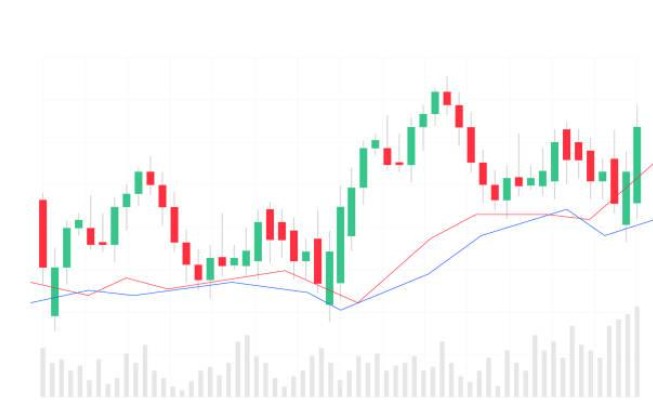
If you’re just getting started with Quotex, you’ve probably asked yourself:
“Which indicator should I use to know when to enter or exit a trade?”
Great question — and the right answer can make a big difference in your results.
Quotex trading offers many built-in indicators, but you don’t need to use all of them. In fact, using too many indicators can confuse you more than it helps. This quick guide will show you the best indicators for beginners, how they work, and how to use them in your trades with confidence.
✅ 1. Moving Average (MA)
What it does:
A Moving Average shows the average price of an asset over a set number of periods. It smooths out the noise so you can see the overall trend.
Best for:
Spotting whether the market is going up (bullish) or down (bearish).
How to use on Quotex:
- Set it to MA 14 or MA 20.
- If the price is above the MA and going up → consider a Call.
- If the price is below the MA and going down → consider a Put.
Pro tip: Combine two moving averages (like MA 5 and MA 20) to catch crossovers — a common signal for entry.
✅ 2. Relative Strength Index (RSI)
What it does:
RSI measures the momentum of price changes. It helps you know if an asset is overbought (too expensive) or oversold (too cheap).
Best for:
Avoiding bad entries when the market is overstretched.
RSI scale:
- Above 70 = overbought (possible reversal down)
- Below 30 = oversold (possible reversal up)
How to use on Quotex:
- When RSI is below 30 and starts turning up → possible Call.
- When RSI is above 70 and starts turning down → possible Put.
Caution: Use with price action, not as a stand-alone signal.
✅ 3. Bollinger Bands
What it does:
Bollinger Bands show how volatile the market is. They create upper and lower “bands” around the price, based on recent movement.
Best for:
Identifying reversals and breakouts.
How to use:
- When the price hits the upper band → watch for reversal down (Put).
- When the price hits the lower band → watch for reversal up (Call).
- When the bands are tight, a breakout may be coming.
Pro tip: Use this in sideways markets (not strong trends).
✅ 4. Stochastic Oscillator
What it does:
Stochastic shows the momentum and possible turning points of price, especially in ranging markets.
Best for:
Spotting quick reversals and timing entries.
How to read:
- Above 80 = overbought (look for Put)
- Below 20 = oversold (look for Call)
How to use on Quotex:
Wait for the Stochastic lines to cross inside these zones. Example:
- Cross upward below 20 → Call
- Cross downward above 80 → Put
Use with: Support and resistance levels for more accuracy.
✅ 5. MACD (Moving Average Convergence Divergence)
What it does
MACD combines two moving averages to show trend direction and momentum.
Best for:
Beginners who want to trade with the trend.
How to use:
- When MACD line crosses above signal line → possible uptrend (Call)
- When MACD line crosses below signal line → possible downtrend (Put)
Bonus: When MACD histogram grows, momentum is strengthening.
✅ Quick Tips for Using Indicators Effectively
- Don’t rely on one indicator alone.
Combine 2–3 indicators for stronger signals (e.g., MA + RSI). - Check different timeframes.
If you’re trading 1-minute expiry, check the 5-minute chart first to spot the broader trend. - Practice on demo first.
Test your favorite indicators in Quotex’s demo mode before using real money. - Match the indicator to the market type.
- Trending market? Use MA or MACD.
- Sideways/ranging market? Use RSI or Stochastic.
- Avoid cluttering your chart.
Too many indicators = analysis paralysis. Keep it simple.
Best Beginner Combinations (Ready-to-Use)
Combo 1: MA + RSI
- Use MA to spot the trend
- Use RSI to avoid overbought/oversold zones
Combo 2: Bollinger Bands + Stochastic
- Use BB to find price extremes
- Use Stochastic for precise entry timing
Combo 3: MACD + Price Action
- Use MACD for trend confirmation
- Use candle patterns (like pin bars or engulfing) for entries
Final Thoughts: Keep It Simple
You don’t need complex systems or paid indicators to win trades on Quotex login. The default tools inside the platform — when used correctly — are more than enough.
As a beginner, your goal should be:
- Learn what each indicator tells you
- Practice combining them with logic
- Build confidence through repetition
Start with one or two indicators. Master them. Then slowly expand your toolkit.